
If you ask parents what they like about our schools they'll probably say: "My children are learning. And they come home happy." Ask a student and they almost always say "gitjagam." That means activities. Our schools also have more traditional classroom settings; we look for a balance between the two approaches. Here's a brief glimpse of some typical activities and games.
Matching games
The first three games all follow a similar pattern. A dealer lays out nine cards. Then players try to find two or more that go together in a certain way. If they're right, they keep those cards. The subjects and exact rules vary.


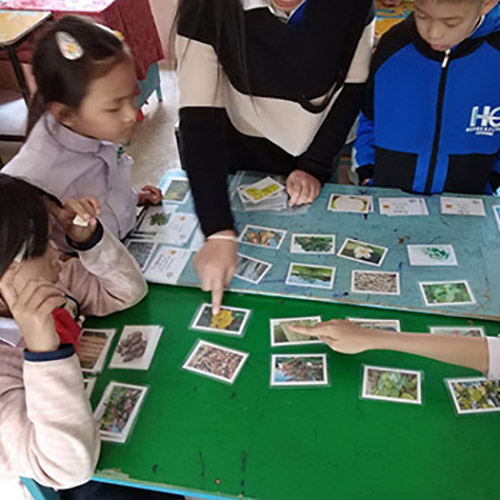
Geography is fun. Honest!
And in case you thought it would impossible to create four games that make geography fun, here are three more.
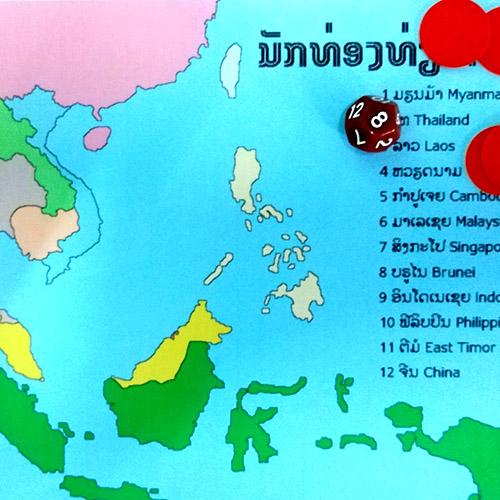
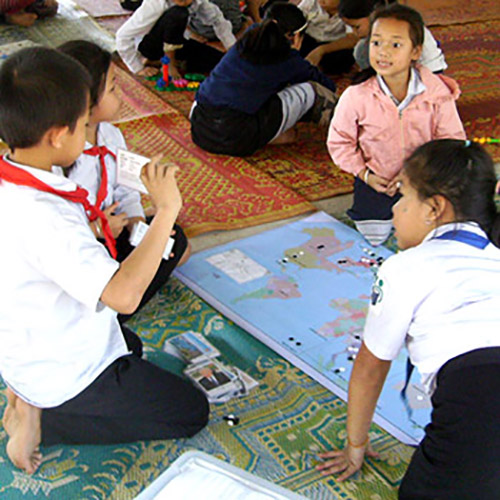

Real skills
The purpose of schooling shouldn't be merely to prepare children for the job market, or for adulthood. A good, well-founded education will achieve that, without making it the focus. Many of our activities, however, do have a clear link to skills that will be useful later.


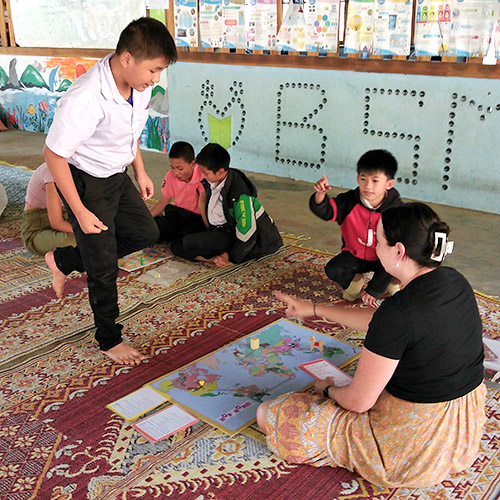
Games for learning English
We've got kids reading Lao, and enjoying it, as early as any of their counterparts just about anywhere in the world. English is harder. Ideally, we'd have fluent English speakers, but anyone with those skills can earn a far higher salary working for a foreign business or NGO than we can pay, while keeping tuition fees that most families can afford. We've got several games that make English fun, and when visitors can play these with children, it gives their learning a big boost.


Experiments
The phrase "active learning" often brings to mind science experiments. It is far broader than that, but it does include experiments of all sorts.
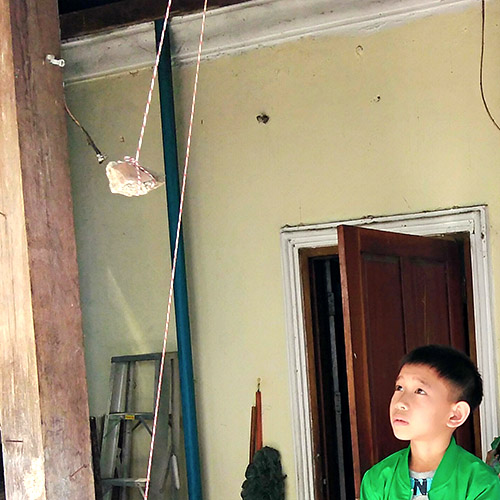
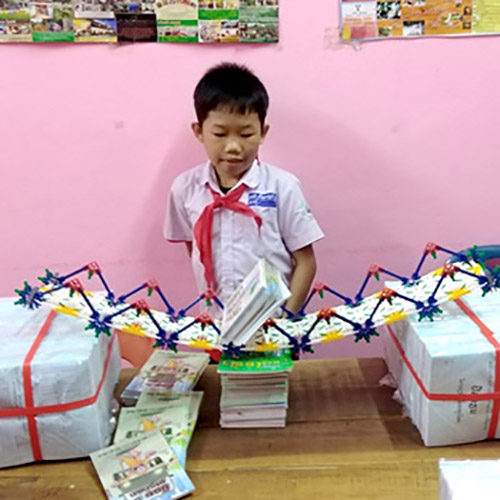

Building and creating
Creating things – whether it's art, a house, or a model catapult, involves forming some sort of goal in your mind, thinking about how to get there, then making the journey, probably with lots of adjustments on the way. Those are all valuable skills, and you don't learn any of them when you're busy memorizing for the test.
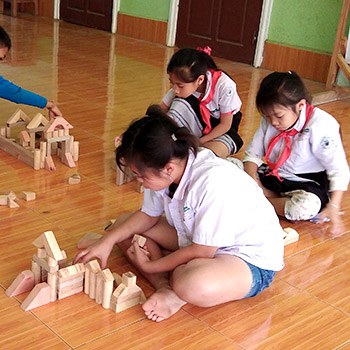


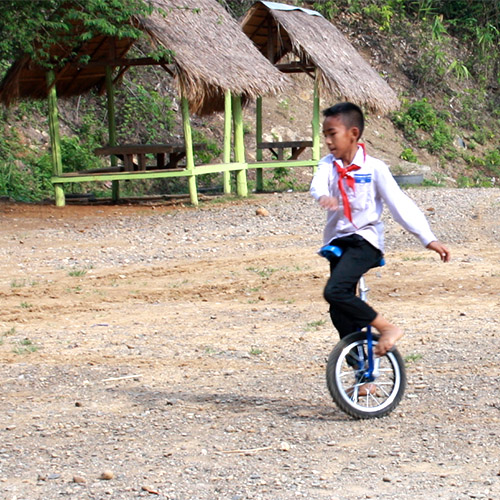
On the move
Much of Lao life has traditionally taken place outdoors. Here, as elsewhere, that is changing. Large numbers of young people are staying in their room, glued to a cellphone. We're helping children discover that a very different, deep satisfaction can come from other activities.


The joy of learning
School should not feel like a prison, or a job, or a fate to be endured. Children are happier, and they'll learn more, when they feel enthused about a subject. We offer many opportunities for that.
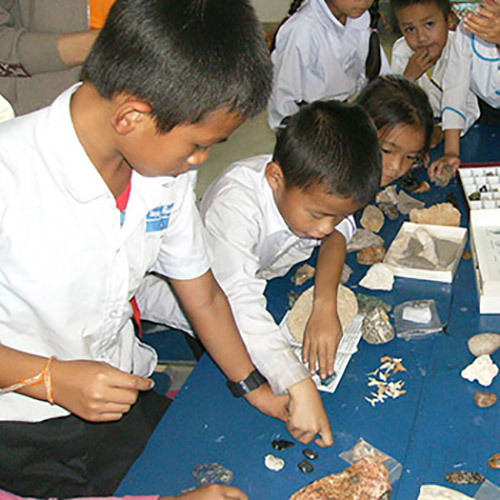

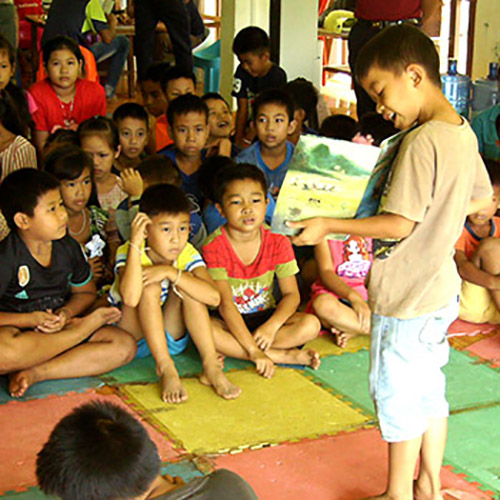
That's merely a sampling of our activities at Big Brother Mouse schools. We haven't mentioned our musical instruments, sports, Chinese lessons, dancing, and dozens of other games. Here, we simply want to show that when we talk about active learning, we really mean it.
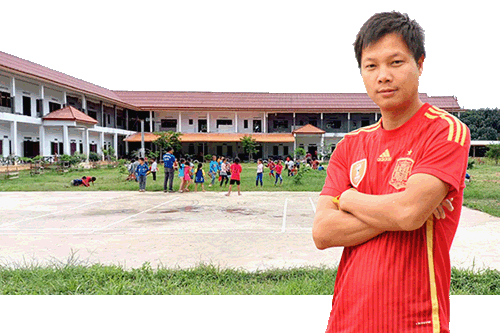
Siphone Wuttisakdy has been part of Big Brother Mouse right from the start.
In 2004, while Siphone was a student at Teacher Training College in Luang Prabang, Sasha brought him three used computers from Thailand. Siphone rented a double-sized dormitory room and installed the computers on one side. The idea was to make computer time available very cheaply to other students, at a time when laptops were rare, smartphones didn't exist, and the only computer access for most students were the internet cafes for tourists, which were too expensive for more than brief email sessions.
Originally, Siphone envisioned that students would use language software on the computers to improve their English skills. Demand was slow at first but Siphone stuck with it, spreading the word, and experimenting with different approaches.
Eventually it became clear that students were more eager to learn computer skills that could help them in the job market, specifically word processing, spreadsheets, and Photoshop. Siphone changed the shop's focus. He wrote simple textbooks in Lao to teach those skills, and business grew.
Siphone later expanded to a larger building, with 10 computers and a small library. Plus movie time on weekends – often the high point of the week for students who worked full-time while going to school. With no good computer repair shop in Luang Prabang, he went to Thailand and took a short course in computer maintenance. Running a shop with 10 computers and hundreds of inexperienced users coming through, he had plenty of opportunity to hone those skills.
When he opened the small shop in 2004, Siphone's first staff was Khamla. As novice monks together, they had become close and trusted friends. Sasha and Khamla, who later formed Big Brother Mouse together, met at Siphone's shop.
Siphone wrote two of our first books. He collected four traditional Lao folktales in The Cat That Meditated. Then he wrote Baby Frog, Baby Monkey, a rhyming book about animal babies. He followed these with an alphabet book, Funny Letters, a collection of stories about Laos's most famous folk hero, Xieng Mieng; a book about good nutrition and parasites, What Happens to Your Food?; and The Picture Thesaurus, which we believe is the first thesaurus in Laos. In all, he has written 28 books for Big Brother Mouse. He became one of the country's most prolific authors, and one of the most read.

After laptops and then cellphones became widespread, Siphone closed the computer shop and joined full-time at Big Brother Mouse, where he was already often helping. While he brought many useful skills to the office, one that we endlessly appreciated was that he knew how to keep computers running.
Fourteen years after opening that small computer shop, Siphone put his business skills and his passion for education into a new project.
After playing a lead role setting up our first school, Big Sister Mouse, and dismayed by the poor quality of schools in his home village, Siphone moved back to that area and opened Ton Kit school. Ten rooms immediately filled; parents were desperate to provide a good education for their children. He added more rooms. They filled up. He added more rooms, built a second school, and then a third.
Everyone familiar with what Siphone has achieved is impressed. Even more impressive is the number of children in Laos who now have the opportunity to develop their potential, thanks to Siphone.