
In 2006, Big Brother Mouse began publishing fun, easy books for children. We took them to schools in the countryside. But most students couldn't read them. Schools were failing.
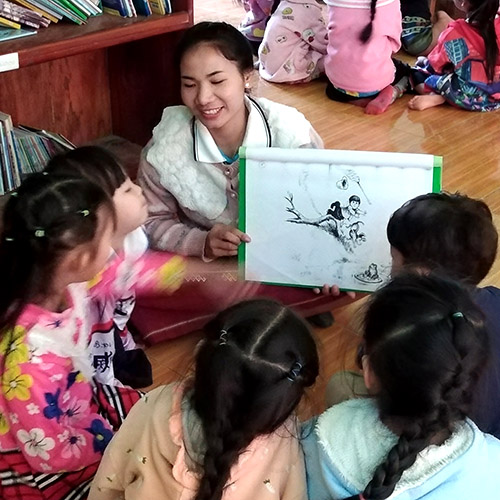
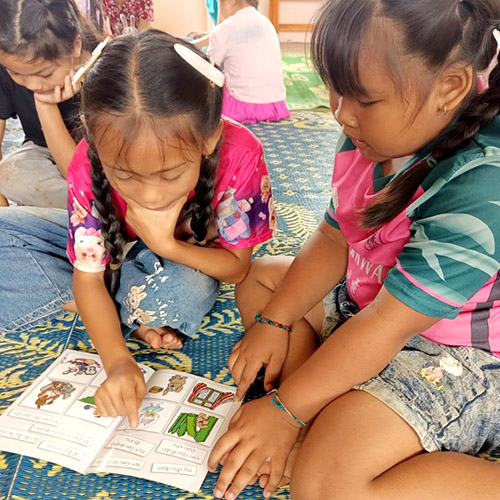
So we began creating schools that work. We now have 11 schools with 4,000 students. They learn to read in kindergarten or grade one... and they soon read with enthusiasm! They learn other subjects such as math and geography. Even more importantly, they develop the broader life skills that we consider essential: Problem-solving, taking responsibility, com-munication, planning ahead, and much else.
Currently, all our teachers attended rote-based schools. We've trained them in more active, engaging techniques, but changing long-established assumptions is a slow process.
To address that, we are planning something different from anything we've ever heard of.
It will be a high school for young people who want to become teachers. Many of them will come from middle schools that are already in our network: Big Sister Mouse, Ton Kit and Little Rabbit. These students will already have experience with our active approach to learning. We'll also welcome stu-dents from other schools for whom our methods will be new, but we've already seen that teenagers with an interest in education, quickly welcome the opportunity to learn better methods. At this high school, students will:
* Study and discuss ideas about how children learn best. For years, we've been compiling articles, essays, and videos that explore this. Now we'll have a time and place to put all that to extensive use.
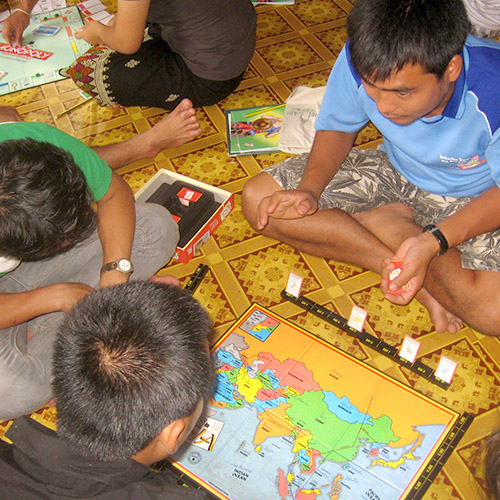
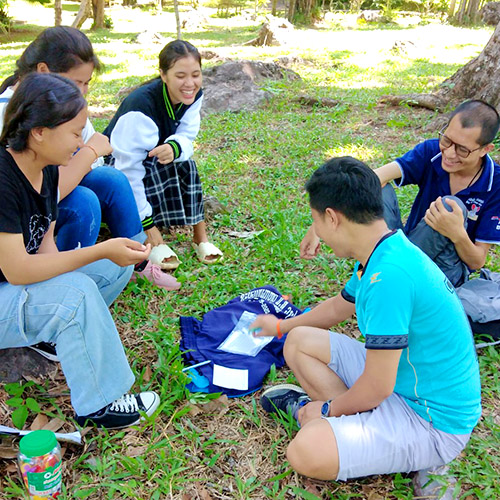
* They will themselves get experience learning through activities, discussion, experiments, reading, and other projects.
* This will be our first upper-level high school. We still need more activities for this level, and one project for students will be developing them.
* At the same location, we'll have a preschool, primary school, and middle school (ages 11-14). There, our high schoolers will get hands-on experience working with younger children.
We opened our first school in 2016. Now we have 11 schools, this will be our twelfth.
Each of these was possible only with support from donors in wealthier countries, who wanted to help children in a poorer country get a better education. We asked for help; generous supporters gave it; and we built the schools. And ten of the eleven were finished on time or earlier; one was delayed by an unusually heavy rainy season that brought a halt to out-door construction.
We intend to open this school in September 2027. We can do that, with your help. A donation of US $8,000 will pay for a classroom; any amount of $2,000 or more can be designated for this purpose. Will you help? Details are on our Donations page (please see main menu above).
From us, from the future teachers who will change education in Laos and from the children who will benefit: Thank you.
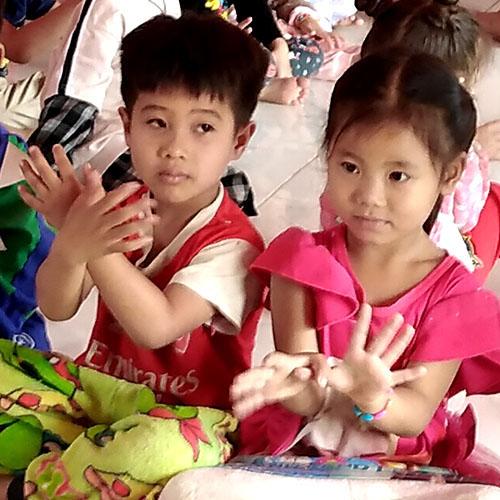
People often ask why we are eager to introduce sign language to children. We have many reasons.
• If a student meets someone who uses sign language, they can communicate.
• In Laos, many children who are deaf never have an opportunity to learn sign language. Often they're dismissed as not-too-bright. A wider awareness will help change this.
• Children are eager to use their fingers and hands. And they have an instinct for learning languages. It's a natural fit at this age.
• There is evidence that learning sign language helps small children learn to read, as they begin to think about individual words.
• And children love it.
The question should be, why isn't sign language taught to young children everywhere?