
Traditionally, books have been rare in Laos. The number of children who go to school has increased but for most, school means repeating what the teacher says in hopes of remembering it for the test. Few Lao people think that reading can be fun or that education can be exciting. Schools are not expected to help children learn to be creative, to ask questions, or to solve problems.
 Big Brother Mouse is changing that. This education project was started by a retired American publisher working with several bright and dedicated Laotian college students. To make reading fun, we looked at the books that children have enjoyed in other parts of the world. We thought about what underlying concepts made those books successful. Then we asked if those concepts could be used in Laos, with new Lao content and pictures.
But many children couldn't read even our simplest books. And the situation was getting worse. Khamla and Siphone, who started Big Brother Mouse with Sasha, had learned to read in grade one, in the early 1990s. Now we found children who had finished primary school, but couldn't read their own name.
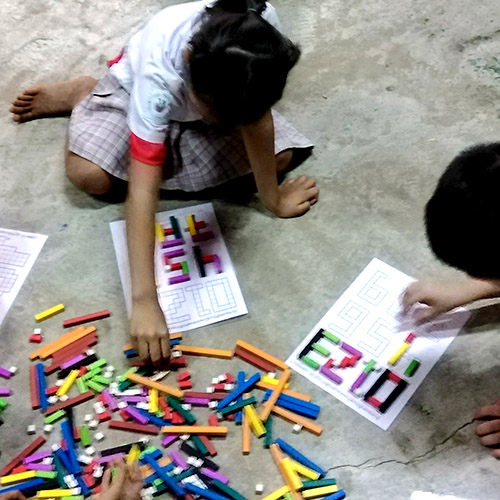
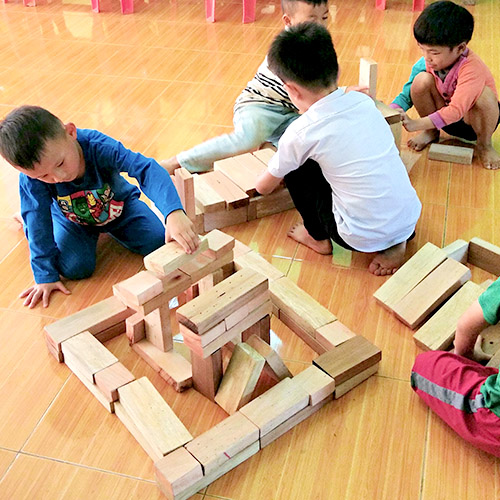
We opened our first school, Big Sister Mouse, in 2016. It had just 13 children in grades one and two. They all learned to read. And they enjoyed it. Now we have 9 schools with 3500 students. We emphasize hands-on learning, problem-solving, and, of course, encouraging a love of reading. Most children learn to read in just 4-8 months, some much faster.
Big Brother Mouse is not an NGO. It is a not-for-profit, Lao-owned project, with a Lao staff. We're helping young Laotians develop new skills, as we're moving to become a self-sufficient Lao publishing house and schools.
We're working toward sustainability. Parents pay a modest tuition fee, about U.S. $25-30 per month. That covers our day-to-day expenses, such as salaries, utilities, and maintenance. Donations help us provide many extras, ranging from globes and musical instruments to computers and field trips. Eventually, we expect these can be covered through tuition fees but at this point in Laos's development, that would put the cost out of reach for poorer families. New school construction is also possible only through the support of donors. In the long run, our goal is that our child-focused approach will be taken up by other schools, and there will be no need for new construction.
We are based in Laos. All planning and decisions are made here in Laos, based on and adapting to the conditions we face. All of our paid staff are Lao.
Charities that operate in developing countries often give away their goods and services. Free. It sounds nice, but in fact, that's a big reason that so little comes of most aid.
When a service is free, then the donor is the customer. The charity or NGO focuses on pleasing the donor. That's who pays their salaries. There's no incentive to do a good job for the recipient, because the recipient isn't paying.
Time magazine ran a story in 2014 headlined: "More Children Are Going to School in India, but They're Learning Less." Today, the World Bank and U.N. say that is widely true throughout the developing world.
The reasons are many, but this is a key one: No accountability.
We are not a charity or NGO. Parents pay us a modest tuition fee, currently about US $25-30 per month. That makes us accountable to them. But that covers just the basics, such as salaries and utilities, not the extras that we need to provide a high quality, well-rounded education. Nor does it pay for construction of new schools. We rely on donations for such things as these:


We could raise the tuition fee to pay for more of this. Some parents could pay more; we have a waiting list for vacancies. But then some families couldn't afford it. Our goal is to make a good education possible for the widest range of children.
So right now, we ask for donations to pay for initial construction, and the extras. Parents are doing their share. Will you help? Our Donation page tells how. Thank you!