

Director: Phonephut Vannasouk
Location: Phonxay Village, Xayabuli District and Province
First opened: September 2022; became part of Big Brother Mouse network in September 2026
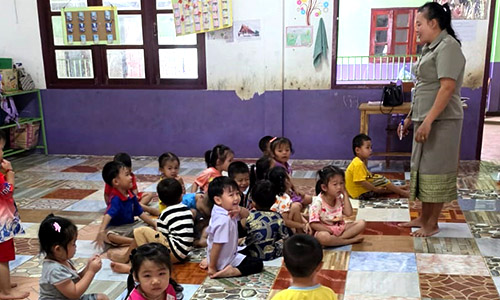
Classrooms: 7
Enrollment: 156 children,
Grades: Preschool and primary school through grade 3, ages 2-8
In 2016, after publishing books for ten years, we had encountered far too many children who couldn't read them. Even by grade five (age 10), half of children in public schools couldn't read a simple text in Lao. So we opened our own school. We had just 13 children in grades 1 and 2. They all learned to read... and they enjoyed it!
Parents and children were thrilled with our active learning approach, which made school fun. Ten years later we were opening our 11th school, with more than 4,000 students getting the benefits of our child-focused approach. We'd open more, but while a modest tuition fee is enough to pay ongoing expenses, the initial cost of construction must come from donors, and that limits what we can do.
In 2026 we got an unexpected opportunity. Eager, like us, to improve education quality, a Lao couple had opened a school four years earlier. But then, they separated and moved to different cities, and weren't able to continue running it. They knew the reputation of Big Brother Mouse schools and asked: Would we like to buy and take over their school?
Certainly! Except that we didn't have the funds to do it. We were asking donors to contribute to Uncle Mouse, a new school that would also offer much-needed teacher training. But they were eager to see their school continue in good hands. They lowered the price and offered to finance some of it; a supporter gave us funds for an interest-free loan; and we added a small amount we'd been planning to put toward Uncle Mouse school, and we cobbled together a deal.
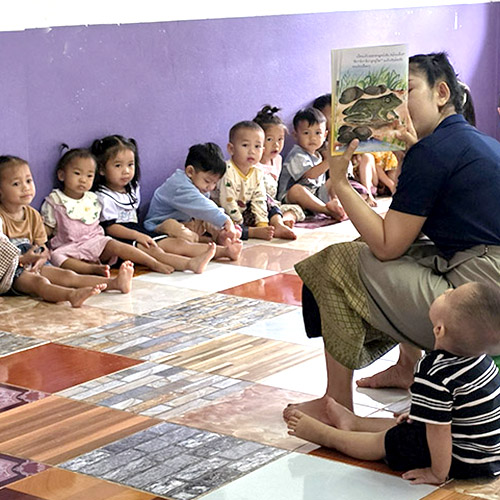
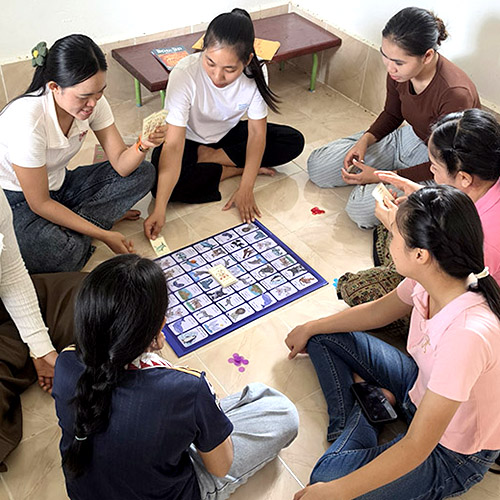
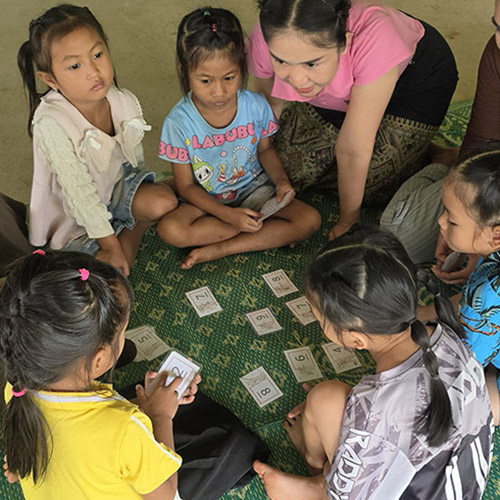
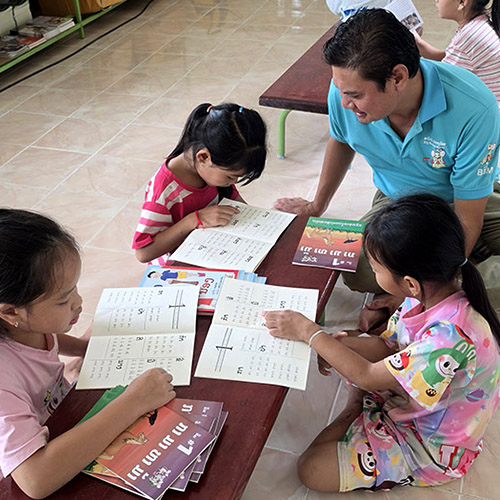
As of the turnover, the school had 4 preschool classes and grades 1 to 3. We plan to add a few more rooms, when finances allow, so it can become a full elementary school. Teachers and students alike have been excited and enthusiastic about the change. The previous owners were committed to better education but didn't have the experience or learning activities that we've acquired in ten years of having schools.
The school was thoughtfully constructed, with attractive tile floors and also a feature we've not seen before, but may use in the future: The roof extends well beyond the school walls, creating a shaded, covered, paved outdoor area that is welcome on both sunny and rainy days.
Little Bird is about a fifteen minute drive from Little Deer school, which opened in 2026 as part of our network.
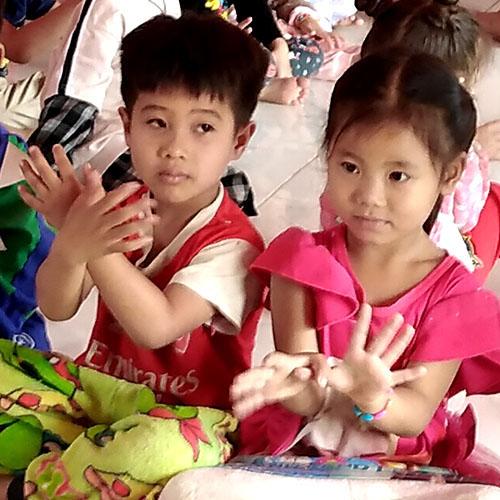
People often ask why we are eager to introduce sign language to children. We have many reasons.
• If a student meets someone who uses sign language, they can communicate.
• In Laos, many children who are deaf never have an opportunity to learn sign language. Often they're dismissed as not-too-bright. A wider awareness will help change this.
• Children are eager to use their fingers and hands. And they have an instinct for learning languages. It's a natural fit at this age.
• There is evidence that learning sign language helps small children learn to read, as they begin to think about individual words.
• And children love it.
The question should be, why isn't sign language taught to young children everywhere?